








One conversation, one place
WhatsApp replies arrive in the same queue as email and LinkedIn, on the same contact, so someone other than you can pick them up.
Less boo. More booked. Halloween offer: 30 days free on any paid plan. Claim 30 days free
Connect a WhatsApp number and handle those conversations in the same inbox as email and LinkedIn. It works best as a warm follow-up, and this page is honest about why. WhatsApp steps in campaign sequences are not available yet.
WhatsApp steps in campaign sequences are not available yet.
Connect a number
Connect a WhatsApp number on the WhatsApp tab in Accounts and message contacts one to one from your inbox.
See how it worksPaced like a person
Volume ramps up automatically so the number stays safe, with no limits for you to type in.
Where it works bestReplies in your inbox
WhatsApp replies arrive in the same queue as everything else, on the same contact.
See the unified inboxThe problem
Almost every WhatsApp message gets opened, but that describes the medium, not your message. A cold pitch in a channel full of family and friends is answered with blocks and reports rather than a polite decline, so the channel works best for people who already know who you are.
See it work
Connect a WhatsApp number on the WhatsApp tab in Accounts and message contacts one to one from your inbox. Volume ramps up automatically.
Why it matters
WhatsApp replies arrive in the same queue as email and LinkedIn, on the same contact, so someone other than you can pick them up.
Volume ramps up on its own so the number stays safe, with no limits for you to type in.
Use it as a second or third touch to a contact who has already engaged, such as an email that got a reply.
How it works
Add a WhatsApp number on its own tab in Accounts, next to your mailboxes and LinkedIn accounts.
Message a contact from your inbox after they have engaged, referencing the earlier contact.
Replies land in the unified inbox on the same contact as the rest of the conversation.
Connected and paced
Connect a WhatsApp number on the WhatsApp tab in Accounts and message contacts one to one from your inbox. Volume ramps up automatically so the number stays safe. WhatsApp is not yet a step in campaign sequences: the usual shape today is an email that got a reply, then a WhatsApp follow-up you send yourself.
One conversation
WhatsApp replies arrive in the same queue as everything else, on the same contact. The point of running the channel here rather than on a phone is that the conversation history stays in one place and someone other than you can pick it up.
Used honestly
WhatsApp is somebody's personal messaging app. A cold pitch there is intrusive in a way a cold email is not, and recipients react accordingly, with blocks and reports rather than a polite decline. It earns its place as a second or third touch to a contact who has already engaged, and it is genuinely strong there.
Almost every WhatsApp message gets opened, and that figure is quoted constantly in outreach marketing. It is real and it is close to meaningless on its own, because it describes the medium rather than your message. People open WhatsApp messages the way they answer a knock at the door. The opening is not consent, it is reflex.
What matters is what happens next. A message from a stranger pitching software in a channel populated by family and friends gets a substantially worse reaction than the same pitch by email, because the recipient experiences it as an intrusion into personal space rather than as one more item in a work queue. The available responses are also harsher: blocking and reporting, rather than deleting.
The pattern connecting all four is prior contact or explicit invitation. That is the line worth holding, and it is where the channel's high open rate converts into something useful rather than into complaints.
Consent rules are stricter here
Under GDPR and PECR, messaging a personal mobile number for marketing generally requires consent, and the legitimate-interest argument that carries a B2B email to a work address is considerably weaker for a personal messaging app. Treat WhatsApp as an opt-in channel and you avoid the entire question.
Cold first touch at volume. It will produce blocks and reports, it damages the number you send from, and in most Western B2B markets it damages the brand attached to it. The people most likely to complain are also the people most likely to tell someone else they complained.
It is also a poor channel for anything that needs a document, a link with context, or a considered reply. Email exists for that, and a prospect who wants to forward your message to a colleague can do it in one action from their inbox and not at all from a chat thread.
The channels to lead with
Shorter than LinkedIn, which is already shorter than email. One or two sentences. No greeting block, no signature, no formatting. The message should look like something a person typed on a phone, because that is what everything around it looks like, and a formatted marketing message in a chat thread announces itself instantly.
Reference the previous contact explicitly. 'Following up on my email about X' does two jobs: it establishes that this is not a cold approach, and it gives the recipient the context to answer without scrolling anywhere.
WhatsApp numbers connect on their own tab in Accounts, next to your mailboxes and LinkedIn accounts, each with its own connection state. Campaign sequences cannot send on WhatsApp yet, so today a connected number is for your inbox: replies and one-to-one messages.
Keep it separate from a personal number. A number used for outreach accumulates whatever reputation the outreach earns it, and blending that with the number your family uses is a decision that is hard to reverse.
Integrations
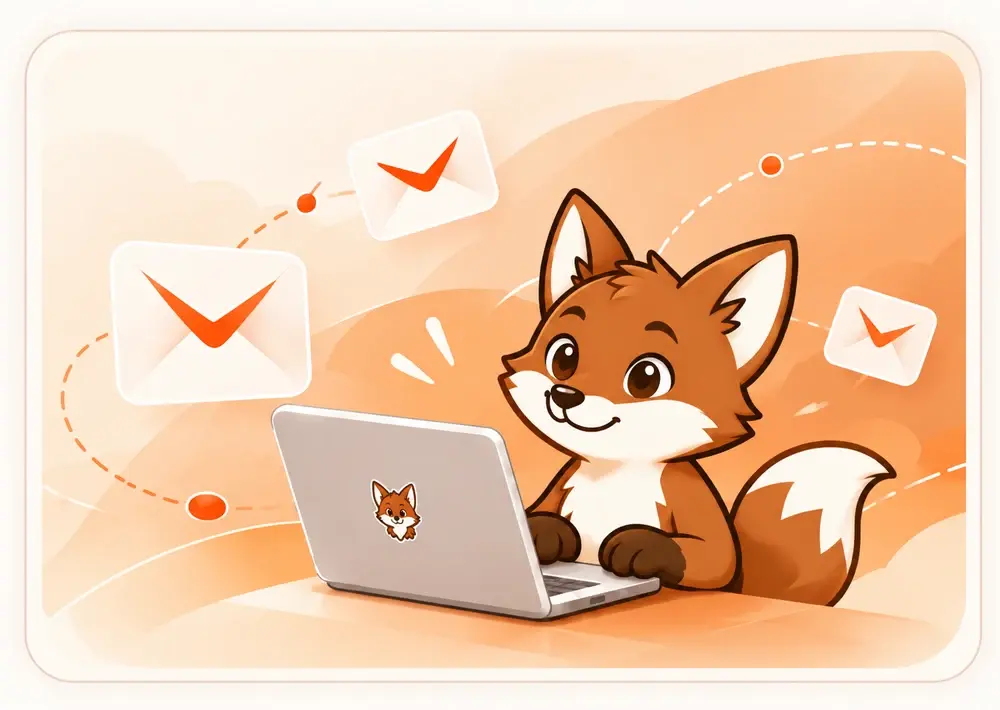
WhatsApp is read in the same inbox as the rest of your outreach.
More from Warmerly
Not from Warmerly: WhatsApp steps in campaign sequences are not available yet, and only one-to-one messages from your inbox are. It would also be a bad idea in most Western B2B markets: the complaint response is blocking and reporting, and it damages both the number and the brand. Use it as a follow-up to contacts who have already engaged.
Yes, in the same queue as email and LinkedIn replies, on the same contact.
It depends on your basis for processing, and the bar is higher than for B2B email. Messaging a personal mobile for marketing generally needs consent under PECR, and the legitimate-interest argument is weaker here. Treating it as opt-in avoids the question entirely.
No. Use a separate business number. Outreach reputation attaches to the number, and mixing it with a personal one is not easily undone.
Speed-sensitive follow-ups with people who already know you, meeting logistics, and markets where WhatsApp is the normal business channel. For a cold first touch, email is better on almost every axis that matters.
Keep reading
Summarize with AI
WhatsApp conversations in the same inbox as email and LinkedIn, used where it works rather than everywhere.
Start free



 ChatGPT
 Claude
 Perplexity