




One sequence for both channels
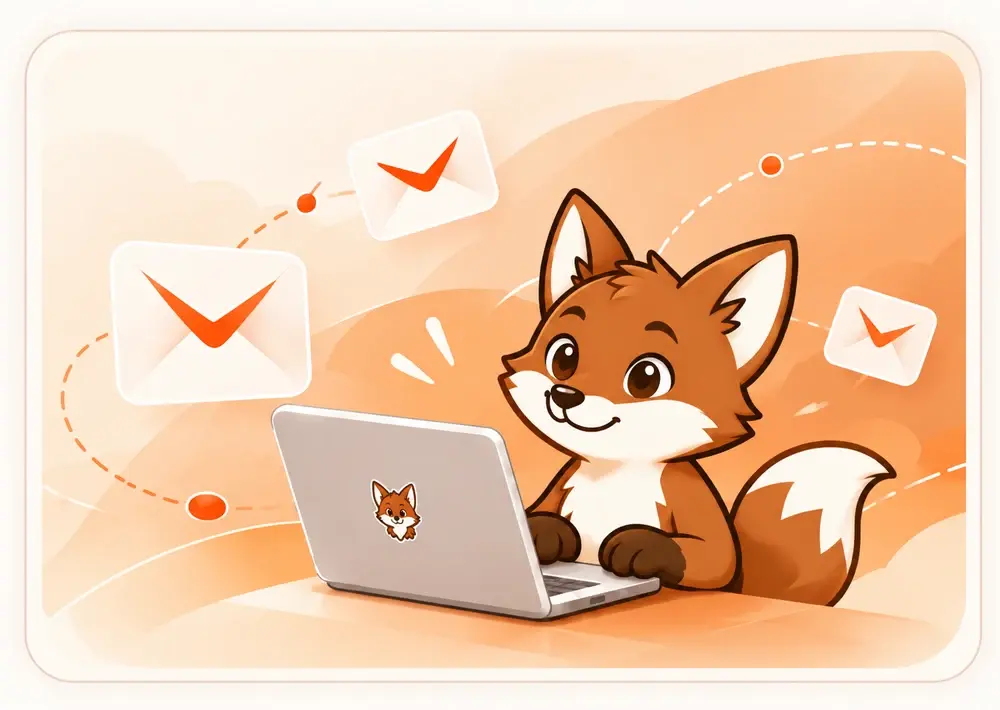
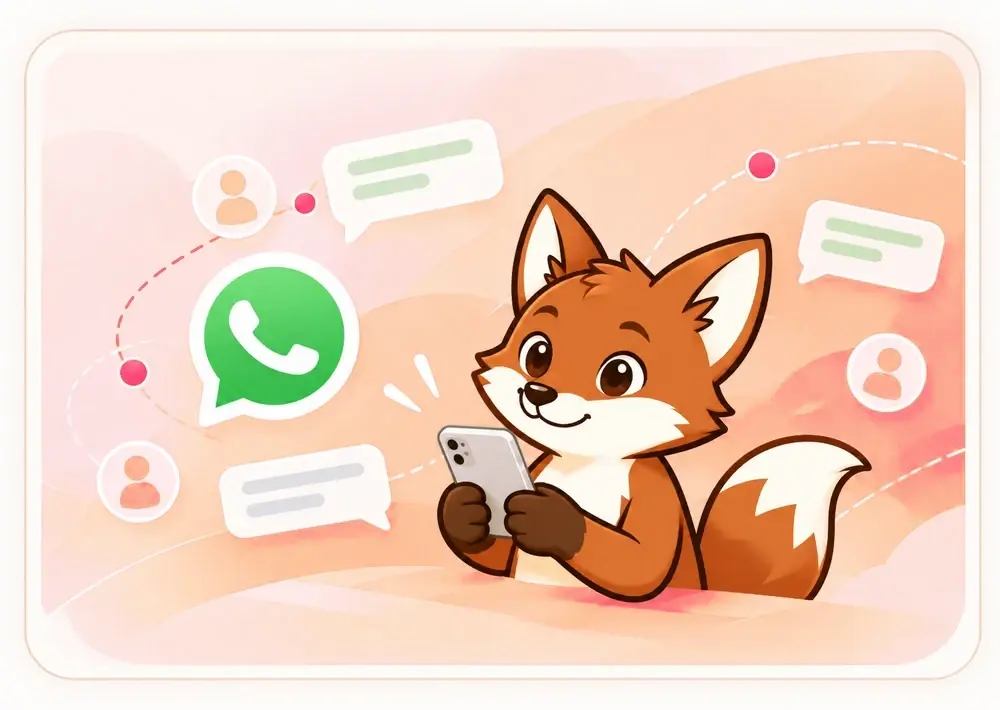
Connection requests and LinkedIn messages are step types on the same timeline as your email steps, each with its own delay.
Less boo. More booked. Halloween offer: 30 days free on any paid plan. Claim 30 days free
Warmerly adds LinkedIn connection requests and messages as steps in the same sequence as your emails, so one timeline covers both channels. Daily limits ramp with the account's history instead of starting at the ceiling, and replies land in the same inbox as email replies. LinkedIn costs $19 a month per account.
The problem
Running LinkedIn in one product and email in another means two cadences you reconcile in your head, which is where prospects end up receiving a LinkedIn message about an email they never got. LinkedIn also restricts accounts that suddenly send far more than they used to.
See it work
A connection request on day 0, an email on day 2, a LinkedIn message on day 5 once the request is accepted: one sequence, one view, one set of delays.
Why it matters
Connection requests and LinkedIn messages are step types on the same timeline as your email steps, each with its own delay.
Daily caps on connection requests and messages rise with the account's history, and actions are spread across the day instead of fired in a burst.
A LinkedIn reply lands in the same queue as your email replies, with the same intent labels and campaign attribution.
How it works
Accounts has a LinkedIn tab beside your mailboxes, with a connection state and its own limits for each account.
Place connection requests and messages alongside email steps and set the delay between them.
LinkedIn conversations arrive with your email replies, so one prospect has one history.
Steps, not a separate tool
A LinkedIn connection request on day 0, an email on day 2, a LinkedIn message on day 5 once the request is accepted, one sequence, one view, one set of delays. The alternative is two products with two cadences that you reconcile in your head, which is where prospects end up receiving a LinkedIn message about an email they never got.
Limits that behave like mailbox limits
LinkedIn restricts accounts that suddenly start sending far more connection requests than they used to, and a restriction on a real personal account is a much bigger problem than a paused mailbox. Warmerly treats LinkedIn action volume the way it treats sending volume, a daily allowance that rises with the account's history rather than a number you type in.
Replies come back to one place
A LinkedIn reply appears in the same queue as your email replies, with the same intent labels and the same campaign attribution. A prospect you emailed and messaged is one conversation with one history, which is the entire practical argument for running both channels in one system.
LinkedIn works for outreach for the same reason it is easy to abuse: the message arrives somewhere people are paying attention, from what appears to be a person rather than a brand. Both halves of that matter. Automation that ignores the second half gets accounts restricted and gets prospects annoyed.
The two channels fail in different places, which is precisely why they combine well. Email reaches almost anyone with a work address, but it competes with a hundred other messages and can be filtered before it is ever seen. LinkedIn has far less competition in the message list and no spam filter between you and the recipient, but it is rate-limited, easy to ignore, and many senior people barely open it.
Used together, a sequence that opens with a connection request and follows with an email is arriving twice through different doors, with the second touch carrying implicit context from the first. The gain is not from doubling volume; it is from the recipient having seen your name before the email lands.
This is counter-intuitive and consistently borne out. A connection request with no note is accepted more often than one carrying a pitch, because accepting it costs nothing and commits the recipient to nothing. A request with a sales note is a decision about whether to enter a sales conversation, and most people decline that decision by ignoring it.
Get the connection first. The message you actually wanted to send is far more effective once you are connected, because it lands in the message list rather than in an invitation nobody opens.
Never automate the accept
Connection requests should be sent by a sequence. What you write to someone who accepted should be worth their time. Automating the request is scale; automating a pitch to everyone who accepted is why LinkedIn outreach has the reputation it does.
LinkedIn does not publish precise numbers, and the effective ceiling varies with account age, whether you have Sales Navigator, your acceptance rate, and how long the account has been behaving the way it currently behaves. What is stable is the shape of the enforcement: a sudden change in behaviour attracts scrutiny far faster than a high but steady volume.
The practical rules that follow are unglamorous. Ramp up rather than starting at your target volume. Keep your acceptance rate healthy, because a low acceptance rate is itself a signal. Spread actions through the working day. And treat a restriction warning as a stop, not a speed bump.
Go deeper on the channel
LinkedIn accounts connect on their own tab in Accounts, alongside your mailboxes, because a campaign treats them the same way. They are senders a step can be assigned to, each with a connection state and its own limits. Connection is through a hosted authentication flow rather than by handing credentials to a browser automation script running on your laptop.
One honest caveat: LinkedIn connectivity depends on a third-party integration, and that dependency is the part of this feature most likely to be interrupted by something outside our control. When it is unavailable, the LinkedIn steps in a sequence stall rather than silently skipping, and the accounts tab shows the account as disconnected rather than pretending it is fine.
LinkedIn messages should be shorter than emails, noticeably shorter. The medium reads as chat, and a five-paragraph message in a chat interface signals a template before anyone has read a word of it. Two or three sentences, one specific reason you are writing to this person, and one question.
The specific reason is the whole game. Something on their profile, a post they wrote, a change at their company. It is also exactly the research the campaign's personalisation step already produces for the email, the same grounded facts, phrased for a shorter medium.
It is a poor fit for high-volume, low-value outreach: the rate limits make cost per contact high, and the account risk is real. It is weak for reaching people who do not maintain a profile, trades, local services, much of the public sector. And it is not a substitute for email deliverability work. If your mail is going to spam, adding LinkedIn does not fix that; it just adds a second channel to a broken first one.
Integrations
LinkedIn is a sender like a mailbox, assigned to campaign steps and read in the same inbox.
More from Warmerly
LinkedIn's user agreement prohibits automated access, and enforcement is real. Restrictions and bans do happen. Anyone claiming a tool is fully sanctioned is misinformed. Conservative volumes, human ramping and genuinely personalised messages are what keep accounts healthy; the risk is yours to weigh.
There is no published figure, and the safe number depends on account age, acceptance rate and history. The reliable rule is to ramp gradually and change behaviour slowly. A sudden jump draws attention faster than a steady high volume.
Usually not. Requests without a note are accepted more often, because accepting commits the recipient to nothing. Save the message for after they accept, when it lands in their message list.
Yes: the same unified queue as email, with the same intent labels and campaign attribution.
Yes. Connection requests and LinkedIn messages are step types on the same timeline as email steps, each with its own delay.
$19 a month for each connected account, or 3 accounts for $49 and 5 for $75. LinkedIn is sold separately from the email plans, has no trial and is non-refundable.
Keep reading
One timeline, one set of delays, one inbox for the replies, with action limits that ramp instead of spiking.
Start free