









Cold email, LinkedIn outreach, Follow-up
The Ideal Follow-Up Cadence for Email and LinkedIn Outreach
Most reply volume comes from follow-ups, not first touches, but only if the spacing, channel mix, and stop conditions are right. Here's the cadence, with the numbers.

8 min read
Summarize with AI
In this article
- The baseline: 4-6 email touches over 12-14 days
- Spacing: front-load, then stretch out
- When to switch to LinkedIn instead of another email
- Let opens and replies reshape the cadence in real time
- When to stop for good
- The combined cadence, end to end
- Where Warmerly fits into this
- The cadence in one line
- Frequently asked questions
Most reply volume in cold outreach doesn't come from the first email. It comes from follow-ups two, three, and four, sent to people who saw the first message, meant to respond, and didn't. The problem isn't that prospects ignore you forever; it's that most senders either stop too early, sending one email and moving on, or keep going with no plan, sending identical nudges a day apart until the prospect blocks them.
This post lays out a cadence with actual numbers: how many touches, how many days between them, when to bring LinkedIn into an email sequence, and which signals should make you speed up, slow down, or stop entirely. It covers single-channel email cadence first, then the combined email-plus-LinkedIn version. For the full mechanics of building that combined sequence, see /linkedin-outreach/multichannel.
The baseline: 4-6 email touches over 12-14 days
For a standard B2B cold sequence, four to six email touches spread across 12-14 days outperforms both a single blast and a long, sparse drip. A single cold email typically gets a 1-3% reply rate on its own. By the fourth touch in a well-built sequence, cumulative reply rate on a decent list usually lands between 8% and 15%, because each additional email reaches people who missed the last one, meant to respond and forgot, or needed a second signal that you're a real person following up, not a one-off blast.
Beyond touch six, marginal reply rate drops sharply: you're mostly reaching people who've already decided not to respond, and the incremental email does more brand damage than good. Six is a ceiling, not a target; three or four is often enough if the first two touches get any engagement at all. The exact count should flex based on deal size: a $200/month self-serve tool can run a tighter 4-touch sequence, while a $50k enterprise deal justifies six touches because the payoff per reply is much higher.
Spacing: front-load, then stretch out
The gap between touches should grow, not stay constant. A cadence of day 0, day 3, day 7, day 12 works better than evenly spaced touches every 3-4 days, because the first follow-up needs to land while the original email is still fresh in the inbox, while later follow-ups can afford more patience since you're now catching people on a different weekly rhythm.
- Day 0: first email
- Day 3: first follow-up, short, references the original briefly
- Day 7: second follow-up, new angle or piece of value
- Day 12-14: final email, direct "should I stop reaching out" close
Sending a follow-up the next day reads as pushy and produces a measurable spike in spam complaints and unsubscribes. Inboxes with any spam-filtering intelligence also start treating same-day repeat sends from a new domain as a signal worth flagging, which is one more reason the spacing matters for deliverability, not just etiquette. If you're still building sending trust for a new domain, that interacts directly with warmup status: see /email-outreach/deliverability for how sending volume and cadence should scale together during the first 4-6 weeks on a new mailbox.
When to switch to LinkedIn instead of another email
The point to switch channels is after the second or third email touch, not after the first. One email with no open or click doesn't tell you much: deliverability issues, a bad subject line, or simple bad timing can all explain silence after a single send. But two or three touches with opens and no reply is a real signal: the person is seeing your emails and choosing not to engage with that format, so a LinkedIn connection request or comment on a recent post reaches them through a channel with different social pressure and different norms around response time.
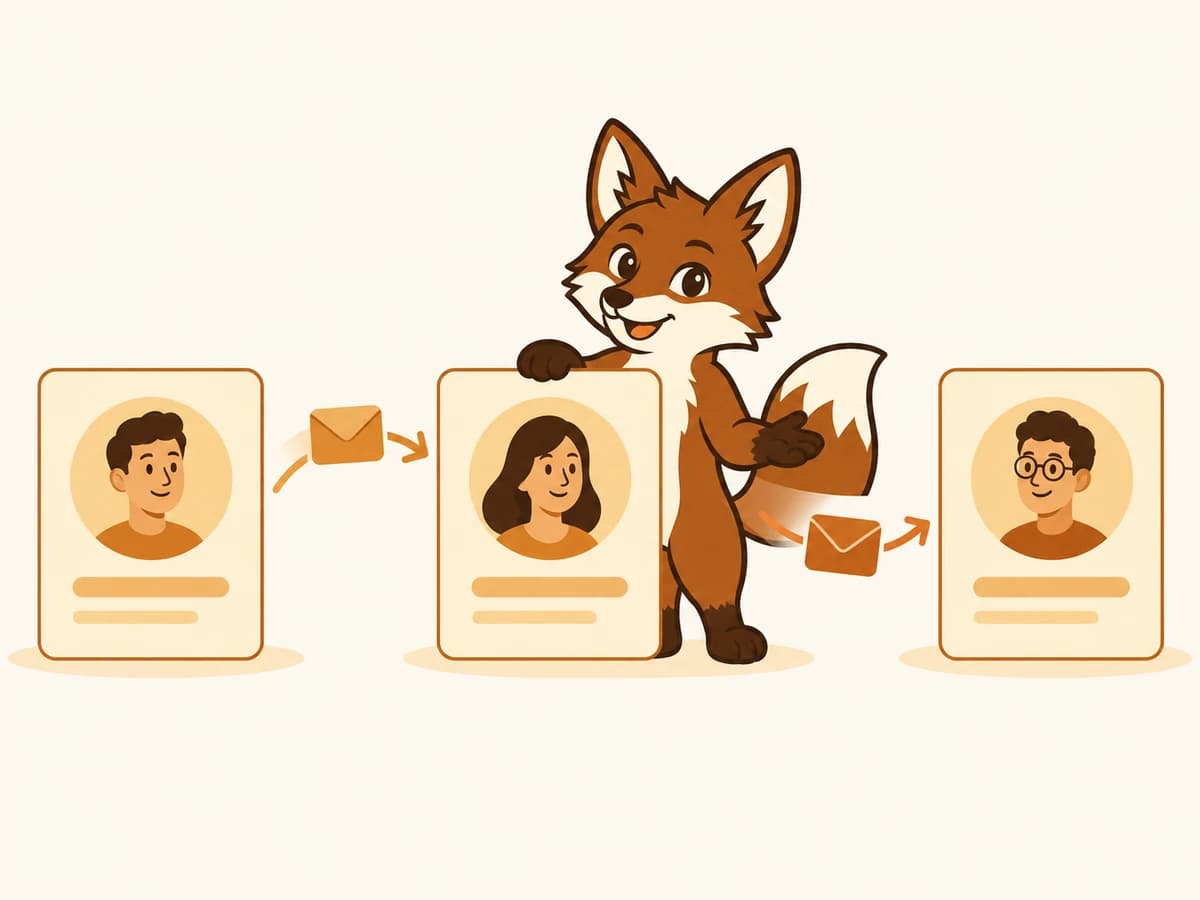
A common effective pattern is two emails (day 0, day 3), a LinkedIn connection request with a short note on day 5-6, then a third email on day 10 referencing the connection if it was accepted. This isn't about abandoning email. It's about using LinkedIn as a mid-sequence pattern interrupt that also builds the kind of familiarity that makes the next email land better. The templates and phrasing for that connection note are covered on /linkedin-outreach/connection-requests, and general timing guidance for LinkedIn sends specifically is on /blog/best-time-to-send-linkedin-messages.
Let opens and replies reshape the cadence in real time
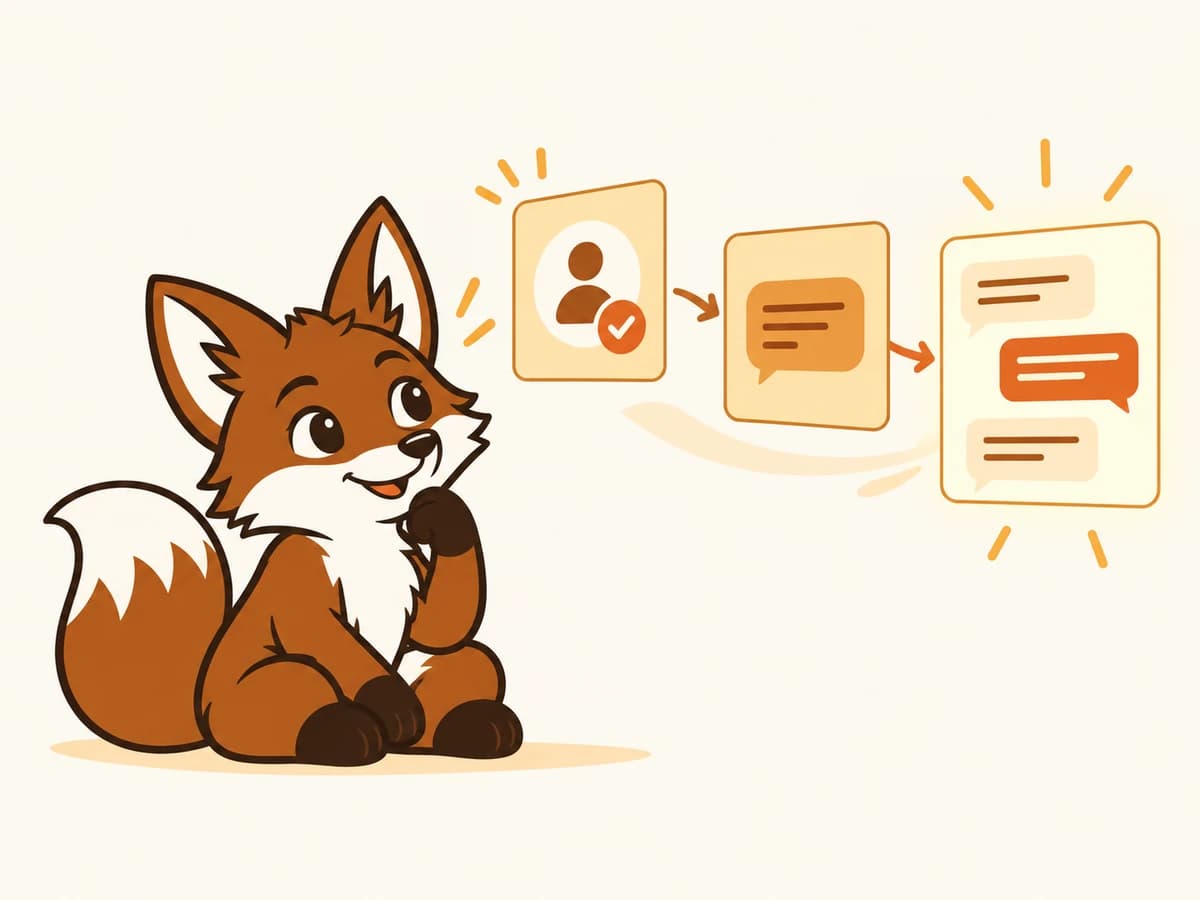
A fixed cadence is a starting point, not a rule. Opens, clicks, and partial replies should shift the schedule for that specific prospect. Someone who opens every email but never replies is a different case than someone who never opens at all, and the cadence should treat them differently rather than running the same five-touch script on both.
- No opens after two emails: the issue is likely deliverability or a bad subject line, not cadence; check inbox placement before sending a third touch, see /blog/spf-dkim-dmarc-cold-email and /email-outreach/limits
- Opens but no clicks or replies: keep the cadence but change the angle each touch; don't repeat the same ask three times
- A reply that isn't a yes or no ("not right now," "circle back in Q3"): stop the automated sequence immediately and set a manual reminder for the date given, automated follow-ups after an explicit reply read as not listening
- Any reply at all: pull the contact out of the sequence entirely, even a "not interested" reply; continuing to send scheduled touches to someone who replied is the single most common cause of complaints
On LinkedIn, the equivalent signal is profile views and message opens without a connection accept. Someone who views your profile after a connection request but doesn't accept within 4-5 days is unlikely to accept later, and a second connection request to the same person reads as harassment rather than persistence. Metrics worth watching per sequence, on both channels, are broken down on /linkedin-outreach/response-rates and /blog/linkedin-outreach-metrics-to-track.
When to stop for good
Stop a sequence after the final scheduled touch with no response, after any explicit reply, or after a hard bounce or connection rejection. There's no version of "one more email" that reliably converts once you're past that point. Re-adding the same contact to a fresh sequence within 60-90 days rarely helps and often hurts; the exception is a genuine trigger event (funding round, new role, product launch) that gives you a real reason to reach out again, not just a recycled version of the same pitch.
For LinkedIn specifically, a rejected or ignored connection request should not be retried for at least 30 days, and never more than twice total to the same profile, because LinkedIn's own restriction algorithms treat repeated rejected requests as a signal of spammy behavior and can throttle your account's ability to send new requests at all, which is covered in detail on /linkedin-outreach/limits and /blog/linkedin-account-restricted-recovery.
The combined cadence, end to end
A full multichannel cadence over two weeks typically looks like: email on day 0, email on day 3, LinkedIn connection request on day 5, email on day 7 (referencing LinkedIn if connected), LinkedIn message or comment on day 10 if connected, final email on day 13-14. That's five to six total touches across two channels, which sits inside the same 4-6 touch ceiling as the email-only version. Adding a channel doesn't mean adding more total touches, it means distributing the same touch budget across two surfaces so no single channel gets overused.
The reasoning for exactly this shape, plus variations for shorter sales cycles and account-based sequences with multiple contacts at one company, is in the dedicated combined-sequence guide at /linkedin-outreach/multichannel. The short version: email carries the detailed pitch because it supports longer-form writing and attachments, LinkedIn carries the social proof and pattern interrupt, and neither channel should run more than three consecutive touches without the other showing up.
Where Warmerly fits into this
Running this cadence by hand across email and LinkedIn means tracking opens, replies, connection status, and timing in at least two separate tools, which is exactly the kind of thing that falls apart around contact 200. Warmerly runs email warmup, LinkedIn outreach, and multichannel sequencing from one place, so the day-3-email-then-day-5-connection-request handoff described above is a sequence step, not a manual cross-reference between two dashboards. And because it's watching deliverability and account health at the same time, it can hold a touch back automatically if a domain's reputation dips mid-sequence.
The cadence in one line
Four to six touches, front-loaded spacing that stretches from three days to two weeks, a channel switch after touch two or three if email alone isn't landing, and an immediate stop on any reply. Everything else (subject lines, connection note wording, exact send times) matters less than getting these four mechanics right, because a well-timed cadence with average copy consistently outperforms great copy sent on a bad schedule.
Frequently asked questions
How many follow-up emails should I send before giving up on a cold prospect?
Three to five follow-ups after the initial email, spread across 12-14 days, is the range that captures most of the achievable reply rate without triggering fatigue or spam complaints. Going past six total touches rarely adds replies and increases the chance of a complaint or unsubscribe, so treat six as a hard ceiling rather than something to work toward.
How many days should I wait between follow-up emails?
Start tighter and stretch out: three days after the first email, four days after that, then five to seven days before the final touch. Same-day or next-day follow-ups read as aggressive and can hurt deliverability on newer domains, while waiting more than two weeks between touches lets the original email fully drop out of memory.
Should I follow up on LinkedIn if someone doesn't reply to my cold email?
Yes, after two or three unanswered emails with opens. A channel switch changes the odds more than another email rewrite. Send a LinkedIn connection request with a short, low-pressure note rather than immediately pitching, since the goal at that point is just getting connected, not closing.
What should I do if a prospect opens every email but never replies?
Keep them in the sequence but change the angle on each remaining touch instead of repeating the same ask. Opens without replies usually mean the offer or timing isn't right yet, not that the person is unreachable. If opens continue with zero engagement past touch four, it's usually more efficient to move them into a slower, lower-frequency nurture list rather than keep running the active sequence.
How soon can I re-add a contact to a new outreach sequence after they don't respond?
Wait 60-90 days minimum, and only re-add them if there's a genuine reason (a funding announcement, a new role, a product change on your side) rather than just resending the same pitch. Recycling contacts into an identical sequence within a few weeks is one of the more common causes of spam complaints on otherwise healthy domains.